It turns out that tween and YA books aren't just for kids (and library students) anymore. In The Kids' Books Are All Right, Pamela Paul confesses that, though she is an adult, she's hooked on books for tweens and teens-- and she's not alone. From Harry Potter to The Hunger Games, Paul writes, adults are devouring books marketed towards kids. She cites a number of reasons for this. Some writers who have traditionally written for adults (Carl Hiassen, Francine Prose, John Grisham) are trying their hand at books for the younger set, and adults familiar with their work give these books a try. Paul cites the burgeoning youth lit consumer culture as another reason; time, money, and energy are devoted to capitalize on this fast growing market.
The biggest reason adults are reading YA and tween books is the simplest, says Paul: they're just great books. They are exciting, suspenseful, and fun. You don't have to work too hard at them. They're straightforward, heartfelt, and satisfying. There are books written in a series, and there is tremendous collective excitement and suspense as fans anticipate new additions featuring their favorite characters and settings (the hype Paul describes surrounding the forthcoming release of Stephanie Collins' Mocking Jay almost makes me want to try reading The Hunger Games again, but for the pesky dead children theme).
As the field of tween and YA literature has grown and expanded, this genre has made a name for itself as innovative, fresh, and exciting. Why wouldn't adults want to read along? This article made me think about my own experiences with the genre-- leaving a wedding early to stand in line for the midnight release of Harry Potter and the Deathly Hallows, laughing along with Diary of a Wimpy Kid (and incessantly saying "Bink says Boo!"), introducing the Eragon audio book to my husband, who now enjoys his hour long commute to work, but mostly thinking about kids out there enjoying the same books. Not only do adults want to read these books, but kids want to read them. And that is the whole point.
Paul, Pamela. "The Kids' Books Are All Right." The New York Times - Breaking News, World News & Multimedia. 6 Aug. 2010. Web. Retrieved 10 Aug. 2010 from http://www.nytimes.com/2010/08/08/books/review/Paul-t.html?_r=3&ref=books
Monday, August 9, 2010
Sunday, August 8, 2010
a series of unfortunate events
ISBN: 978-0064407663
Lemony Snicket. Don't you want to read books written by a person called Lemony Snicket? Even if it is a pseudonym?
The Bad Beginning (and the subsequent 12 books in this series) chronicles the misadventures of Violet, Klaus, and Sunny Baudelaire, three siblings whose parents have died in a mysterious, tragic fire. With no responsible adults to care for them, the Baudelaires are left to their own devices to survive--and prevail over the evil Count Olaf, a most delicious villain who is intent on claiming the Baudelaire fortune.
In The Bad Beginning, the first book of the series, the Baudelaires find themselves all of a sudden thrust into a world where adults fall into one of two groups: kind, sweet, well-meaning adults (like Mr. Poe and Justice Strauss) who are completely ignorant to the truth of any situation, or evil adults like Count Olaf and his bizarre gang of accomplices. Klaus, Violet, and Sunny quickly learn that they will have to fend for themselves. This they do, by each capitalizing on their special talents. Violet, a brilliant inventor, creates contraptions to help her siblings out of sticky situations, always pausing to tie her hair up with a ribbon first, which maximizes her creative thinking. Klaus, a bookworm, uses his knowledge of everything from trains to grammar to snakes to pasta sauce to stay one step ahead of count Olaf. And Sunny? Well, Sunny bites. She’s just a baby, after all. But her sharp teeth come in handy over and over again.
Each book involves near-misses, dangerous scrapes, inept adults, crazy inventions, bravery, and adventure. As the series progresses, the Baudelaires begin collecting clues about a mysterious group called the VFD that is connected to their parents somehow, and the second half of the series deals with this mystery in addition to the continued battles with Count Olaf.
The books follow a fairly predictable plot structure—near-misses, dangerous scrapes, inept adults, crazy inventions, bravery, and constant exhortations to stop reading (a delightful bit of reverse psychology that works). Snicket's lyrical, verbose writing is as much a character as any of the people in the series; puns and impressive vocabulary words are peppered throughout. Each book ends with a bit of a cliffhanger, and readers will want to read through the whole series to see what becomes of the Baudelaires. The ending isn't happy. But you are warned at the beginning that it won't be. A fabulous read aloud selection; great also for a third or fourth grader looking to get hooked on a series.
Saturday, August 7, 2010
charlie and the chocolate factory
Blake, Q., & Dahl, R. (1964). Charlie and the chocolate factory. New York: Knopf.
ISBN: 978-0142410318
Like Oliver Twist before him, and Harry Potter since, the odds are stacked against Charlie Bucket. Poor, worried, and well aware of the injustices in the world, he goes through life quiet, lonely, and a bit sad. Unlike Oliver and Harry, however, Charlie has the support of a loving family, including four grandparents who never leave their bed (and provide comic relief). Charlie’s hometown is dominated by the presence of Willy Wonka’s mysterious chocolate factory, a place where “Nobody ever goes in—and nobody ever comes out.”
The town and the world are thrown into an excited uproar when it is announced that Wonka’s factory will open and five lucky visitors will be taken on a tour. To determine who will enter the factory, five golden tickets have been hidden inside Wonka bars. The race for golden tickets is an exciting beginning to this story, but the real fun begins when Charlie, along with his Grandpa Joe and four other children, enter the factory and meet the peculiar Willy Wonka. Readers will delight in the descriptions of the candy in the factory (eatable marshmallow pillows, fizzy lifting drinks, everlasting gobstoppers), and in the fates that befall the not so pleasant children Charlie meets.
This book was criticized when it was first published for being too nasty, and for containing unflattering portraits of children in competition with each other and meeting bad ends. That was pre-Hunger Games, of course, so those issues are perhaps less of a concern in the contemporary world of tween and YA literature. While film adaptations of books vary in quality, both Charlie movies—starring Gene Wilder (1971) and Johnny Depp (2005) are fabulous. Want to start a tween book-into-movie club? Here’s your first selection. Read, watch, enjoy.
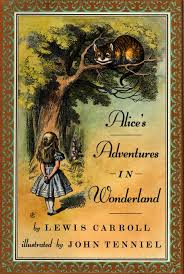
alice's adventures in wonderland
Tenniel, J., Carroll, L., Carroll, L., & Carroll, L. (2007). Alice's Adventures in Wonderland. London: Macmillan Children's.
ISBN: 978-0230015135
Forget Disney, or even Tim Burton: this is the wild, trippy original. With lush language and adventure at every turn, this rambling ride would be a fun choice for tweens who are good readers with a bit of patience. The writing style may elude some; for those ready for it, it's a treat.
ISBN: 978-0230015135
Forget Disney, or even Tim Burton: this is the wild, trippy original. With lush language and adventure at every turn, this rambling ride would be a fun choice for tweens who are good readers with a bit of patience. The writing style may elude some; for those ready for it, it's a treat.
freaky friday
Rodgers, M. (1972). Freaky Friday. New York: Harper & Row.
ISBN: 978-0064400466
Before it was a movie starring Lindsay Lohan, and before it was a movie starring Gabby Hoffman, and even before it was a movie starring Jodie Foster, it was a book. A book about magic, surprises, and family.
Thirteen-year-old Annabel is our hero—she’s smart, sassy, and outspoken, and she can’t wait to grow up. Tired of all of the injustices she experiences (annoying parents, unfair teachers, a pesky little brother), Annabel finds herself, the morning after a big fight with her mother, transformed into her mother. She now must fool everyone long enough until she can figure out how to get back into her body again.
Along the way, we meet Ben, (the aforementioned pesky younger brother, otherwise known as Ape Face), Annabel’s loving but slightly distracted father, and Boris, the upstairs neighbor who cooking specialty is meatloaf—or something like it. We meet Principal Dilk and the evil English teacher Mrs. McGurk, but mostly we watch Annabel grapple with the responsibilities and freedom of adulthood. Between picking Ben up from school, attending parent-teacher conferences, and breaking the washing machine, there’s not as much time for fun as Annabel expected.
We learn that speaking up against injustice is something that adults can do too, and that being a 13 year old can be kind of fun—especially when you’ve got your mother’s credit cards. We learn that Sugar Coated Snappy Crackles are sometimes the perfect breakfast—and that little brothers might not be so bad after all
With surprising plot twists along the way, freaky Friday is a great ride. Originally published in 1972, some of the slang and pop culture references are outdated, but the story is timelessly winning. A great selection for young tweens, especially those who have enjoyed Ramona’s antics and are ready for something more mature.
Friday, August 6, 2010
censorship and the role of the librarian
I think a lot about intellectual freedom and access to information when it comes to tweens. This age group is in need of information about all kinds of topics, and today's tweens are growing up during this great age of information. My general viewpoint is, information is good. Guidance about how to interpret information is also good. While I'm not always as gung-ho as my colleagues about information access ("sure kids, look at porn on the library computer!"), it seems to me that a librarian is not in the position to arbitrarily limit tweens' (or anyone's) access to library materials. Right? Right.
Apparantly, a librarian did just that recently, and it's causing an uproar. According to School Library Journal, the library director of the Burlington Country Library System in Burlington, NJ has issued a directive that all copies of Revolutionary Voices: A Multicultural Queer Youth Anthology (Alyson, 2000) be removed from circulation. The librarian did this despite no formal challenge being raised, and cited child pornography as the reason for the removal of the book. The book in question has earned praise from School Library Journal as well as GLSEN (The Gay, Lesbian, and Straight Education Network). It is unclear exactly what prompted the librarian to order the book's removal, but her decision was upheld by the Library System's Board of Commissioners.
It's hard to tell from the outside, but this seems like a pretty outrageous and egregious exercise of power. It also reminds me of the enormous power librarians possess as gatekeepers of information, and the restraint with which that power needs to be exercised. Certainly, if a book is genuinely pornographic, that I say, get it out of the library.* But it's hard to believe that whoever works in collections development is choosing pornographic titles for the library. Also disturbing is the lack of a clear challenge to this book. There might be occasions where it is truly appropriate to remove a book that is inappropriate or offensive, based on concerns raised by the community.* But in the absence of a clearly documented challenge process, the whole situation winds up feeling fishy to me, especially given the "controversial" nature of this book. The irony, of course, is that there may be tweens out there who desperately need exactly this book, and it's a shame for their information access to be muddled in this way.
*cue the ALA and their pitchforks...
Barack, L. (2010, July 27). NJ library, citing child pornography, removes GLBT book. School Library Journal, Retrieved from http://www.schoollibraryjournal.com/slj/home/886066-312/nj_library_citing_child_pornography.html.csp
UPDATE: Not such a random act by this librarian after all. The facists religious right put her up to it.
Apparantly, a librarian did just that recently, and it's causing an uproar. According to School Library Journal, the library director of the Burlington Country Library System in Burlington, NJ has issued a directive that all copies of Revolutionary Voices: A Multicultural Queer Youth Anthology (Alyson, 2000) be removed from circulation. The librarian did this despite no formal challenge being raised, and cited child pornography as the reason for the removal of the book. The book in question has earned praise from School Library Journal as well as GLSEN (The Gay, Lesbian, and Straight Education Network). It is unclear exactly what prompted the librarian to order the book's removal, but her decision was upheld by the Library System's Board of Commissioners.
It's hard to tell from the outside, but this seems like a pretty outrageous and egregious exercise of power. It also reminds me of the enormous power librarians possess as gatekeepers of information, and the restraint with which that power needs to be exercised. Certainly, if a book is genuinely pornographic, that I say, get it out of the library.* But it's hard to believe that whoever works in collections development is choosing pornographic titles for the library. Also disturbing is the lack of a clear challenge to this book. There might be occasions where it is truly appropriate to remove a book that is inappropriate or offensive, based on concerns raised by the community.* But in the absence of a clearly documented challenge process, the whole situation winds up feeling fishy to me, especially given the "controversial" nature of this book. The irony, of course, is that there may be tweens out there who desperately need exactly this book, and it's a shame for their information access to be muddled in this way.
*cue the ALA and their pitchforks...
Barack, L. (2010, July 27). NJ library, citing child pornography, removes GLBT book. School Library Journal, Retrieved from http://www.schoollibraryjournal.com/slj/home/886066-312/nj_library_citing_child_pornography.html.csp
UPDATE: Not such a random act by this librarian after all. The
teens cook
Carle, J., Carle, J., Boone, J., & Carle, M. (2004). Teens cook: How to cook what you want to eat. Berkeley, Calif: Ten Speed Press.
ISBN: 978-1580085847
With recipes like Baked French Toast, Taco Salad, and Eggplant Parmesan, Teens Cook is an appealing primer for those interested in getting into the kitchen. Recipes for breakfasts, snacks, family meals, and desserts are included, and instructions are straightforward. This book was written by two teenagers, which lends it an air of credibility.
ISBN: 978-1580085847
With recipes like Baked French Toast, Taco Salad, and Eggplant Parmesan, Teens Cook is an appealing primer for those interested in getting into the kitchen. Recipes for breakfasts, snacks, family meals, and desserts are included, and instructions are straightforward. This book was written by two teenagers, which lends it an air of credibility.
Subscribe to:
Posts (Atom)